Most startups don’t fail because of product quality. They fail because they can’t get packaging. Traditional factories demand 50,000+ units minimum before they’ll even return your email. That’s 50,000 reasons to delay your launch — and 50,000 units of inventory risk for a product that hasn’t proven itself yet.
Low MOQ custom flexible packaging has become accessible enough that you no longer need to choose between launching with plain stock bags or betting your entire budget on a massive order. The right supplier delivers gravure-quality, certified packaging at quantities that make sense for growing brands.
If you have a great product but can’t meet traditional MOQs, you’re in the right place. As flexible packaging for startups becomes more accessible, this guide covers what “low MOQ” means, why minimums exist, which pouch types are available at accessible quantities, how to order step by step, and how to evaluate suppliers so you don’t get burned.
Key Takeaways
- Low MOQ spans multiple tiers — from 100 pcs (digital) to 10,000 pcs (gravure). The 10,000-unit tier is where premium gravure quality becomes accessible to startups.
- 10,000 units is the sweet spot — it enables gravure printing (full Pantone matching, up to 10 colors, premium finishes) while keeping inventory risk manageable.
- MOQs exist because of fixed setup costs — gravure cylinders cost ~$100–$150 (USD) per color. Digital eliminates plates but raises per-unit cost and limits color options.
- Certifications apply at every quantity — ISO 9001, FDA, and BRC should cover all orders, not just large ones.
- Delivery speed matters — DSS Pack delivers in 15 days after order confirmation, versus the industry standard of 25–40 days.
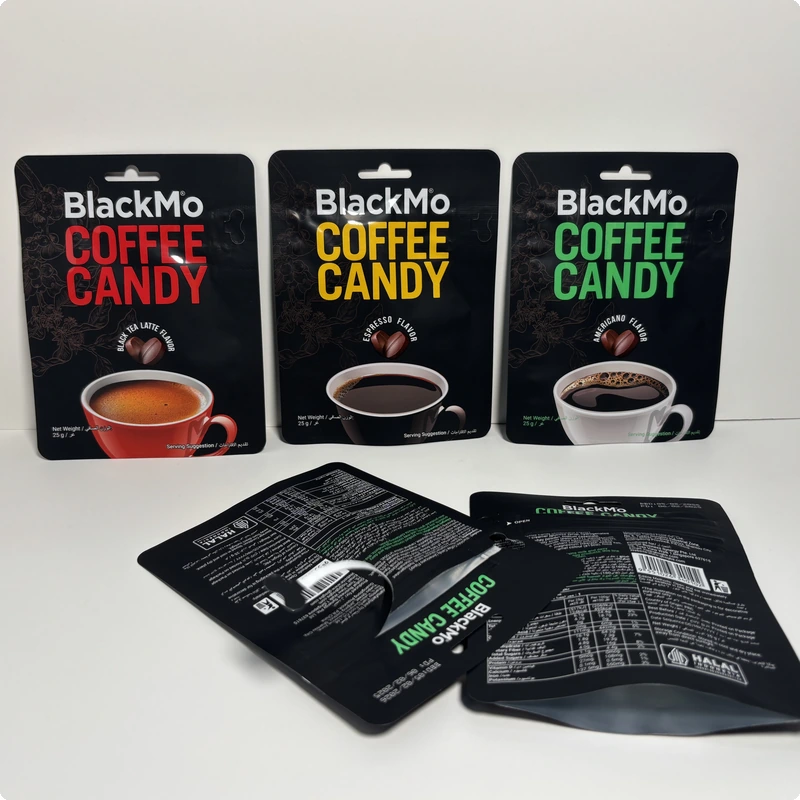
What Does “Low MOQ” Mean in Flexible Packaging?
This is the question every startup asks when they start shopping for low MOQ custom flexible packaging. MOQ stands for Minimum Order Quantity — the smallest number of units a manufacturer will accept for a production run. In flexible packaging, MOQ is driven by the printing method, material structure, and fixed machine setup costs.
The global flexible packaging market reached $336.87 billion in 2025 and is projected to hit $415.95 billion by 2030, according to Mordor Intelligence. Pouches alone captured 46.74% of that revenue. Yet despite this massive market, most factories still structure MOQs around high-volume buyers — leaving startups and small brands locked out.
Here’s what “low MOQ” actually looks like in practice:
Industry standard: Most gravure printing factories set their MOQ at 50,000+ pieces per SKU. Some go higher. Gravure requires engraved metal cylinders for each color, and the setup cost only makes economic sense at high volumes.
What “low” actually means:
| Tier | MOQ Range | Print Method | Best For |
|---|---|---|---|
| Ultra-low | 100–500 pcs | Digital | Market testing, samples |
| Low | 1,000–5,000 pcs | Digital | Small DTC brands, seasonal |
| Accessible | 10,000 pcs | Gravure | Startup launches, scaling brands |
| Standard | 50,000+ pcs | Gravure | Established brands, high volume |
The 10,000-unit tier is what most growing brands should target. It’s low enough to keep inventory risk in check, yet high enough to make gravure printing viable — the benchmark for flexible packaging quality. Low minimum order quantity packaging at this tier gives you full Pantone color matching, premium finishes, and access to every material structure available.
Throughout this guide, “low MOQ” primarily means this accessible 10,000-piece gravure tier.
Why Do MOQs Exist? Understanding the Economics
Low MOQ custom flexible packaging exists because of the economics described below. Minimum order quantities aren’t arbitrary barriers. They reflect the fixed costs baked into packaging production. Understanding these economics helps you order smarter.
Fixed Setup Costs
Every production run carries costs that exist regardless of order size:
- Cylinder/plate preparation: Gravure requires one engraved metal cylinder per color, at approximately $100–$150 (USD) each. A 6-color design means $600–$900 (USD) in cylinder fees before a single pouch is printed.
- Machine calibration: Presses must be aligned, inked, and calibrated — hours of skilled labor plus material waste.
- Material waste: The first several hundred meters of film are consumed for setup and color matching.
Gravure vs. Digital: The MOQ Gap
Gravure delivers exceptional quality — razor-sharp detail, exact Pantone matching, consistent color across long runs. But each color needs its own cylinder. If your 6-color design costs $750 (USD) in cylinders and you order 500 units, that’s $1.50 per unit just in cylinder costs. At 10,000 units, it drops to $0.08. At 50,000, it’s $0.02. This is why gravure factories set high MOQs.
Digital printing eliminates cylinders entirely — artwork goes straight from file to press. This enables MOQs as low as 100–500 pieces. But digital per-unit costs are significantly higher, and you’re limited to CMYK color mixing with no exact Pantone spot matching, fewer material options, and no specialty finishes.
The Trade-Off
Ten thousand pieces is where gravure becomes economically viable while remaining accessible. Below that, digital is often the only option — with higher per-unit costs and quality limitations. Above 50,000, marginal savings per unit diminish rapidly while inventory risk grows disproportionately.
Small batch flexible packaging at the 10,000-unit tier represents the best value for growing brands: gravure quality at a quantity your business can absorb.
What Makes 10,000 Units the Startup Sweet Spot?
Below 10,000: The Digital Ceiling
Why does low MOQ custom flexible packaging make sense at 10,000 units? Order custom printed pouches at low MOQ through digital printing, and you immediately hit hard limitations:
- CMYK only: Digital simulates Pantone colors but can’t match them exactly.
- Higher per-unit cost: Without volume to amortize across, each pouch costs significantly more.
- Limited material structures: Many high-barrier laminations aren’t available for digital.
- No premium finishes: Soft-touch, metallic inks, and spot UV require physical gravure cylinders.
Take a DTC snack brand that ordered 500 digitally printed pouches for their launch. The per-unit cost was nearly three times what gravure would have offered at 10,000 units. When they tweaked their logo two months later — a normal iteration for an early-stage brand — those 500 pouches became obsolete. They reordered digitally again, paying the same premium. By the time they found their footing, they’d spent more on two small digital runs than a single 10,000-unit gravure order would have cost — with better quality.
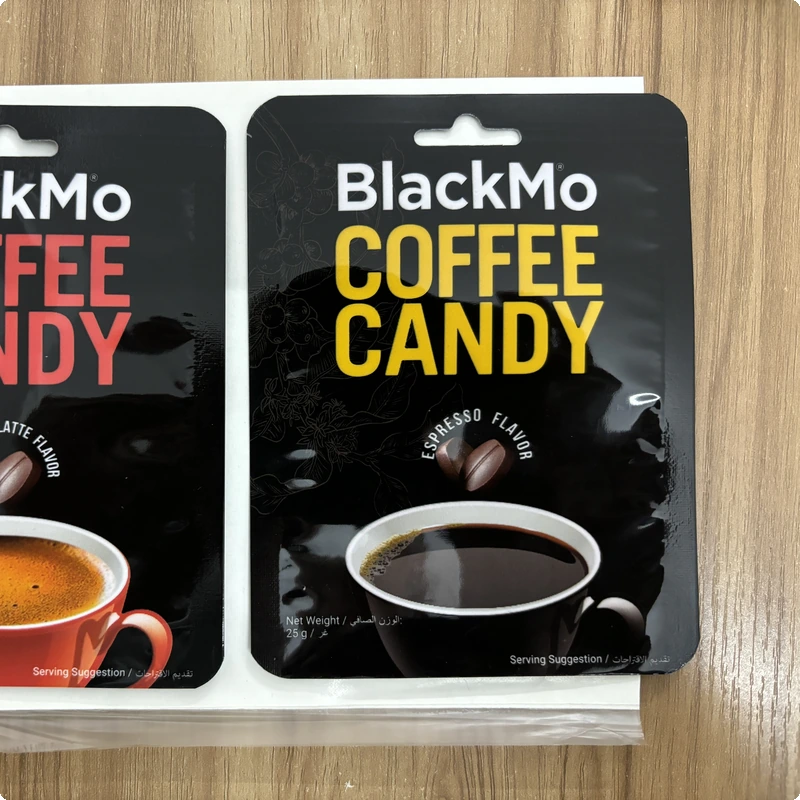
At 10,000: Where Gravure Becomes Viable
Cross the 10,000-unit threshold and everything changes:
- Full Pantone color matching: Brand colors are mixed as spot inks via dedicated cylinders.
- Up to 10 colors: Complex, multi-color designs that digital can’t replicate.
- Premium finishes: Matte, gloss, soft-touch, and metallic coatings.
- All material structures: From standard PET/PE to ultra-high-barrier PET/AL/PE.
- Lower per-unit cost: Cylinder costs amortize across 10,000 units.
For brands packaging oxygen-sensitive snacks, our high-barrier snack and candy packaging guide breaks down the OTR and WVTR numbers that keep products fresh.
Above 50,000: Diminishing Returns
A jump from 10,000 to 50,000 might save 15–20% per unit. But you’re now holding 40,000 additional units of inventory that ties up working capital, occupies warehouse space, and carries obsolescence risk.
Industry data shows annual carrying costs run 20–30% of inventory value, and roughly 8% of surplus stock ultimately gets discarded.
Globally, retailers lose an estimated $362.1 billion annually to excess inventory. For a startup, over-ordering ties up capital that should go into marketing, product development, or hiring — the very investments that drive growth.
Here’s a real-world example: A specialty coffee brand found the 10K sweet spot after initial missteps. Their first order was 2,000 digitally printed flat bottom pouches — adequate for testing, but at nearly double the per-unit cost of gravure.
Once they validated demand, they placed a 10,000-unit gravure order with DSS Pack. Same brand colors (exact Pantone match), premium matte finish, high-barrier material for freshness — at a per-unit cost that made their retail margins workable. They reinvested the savings into a targeted ad campaign that doubled their reorder frequency.
That’s why DSS Pack sets its MOQ at 10,000 pcs for pouches and 300 kg for rollstock film — low enough for startups, serious enough for gravure quality.
Pouch Types Available at Low MOQ
At DSS Pack, the low MOQ custom flexible packaging range includes five main pouch types. Each format serves different products, retail channels, and shelf-presence goals.
Stand-Up Pouches
The most popular flexible packaging format worldwide. Stand-up pouches offer excellent shelf presence, with options like resealable zippers, tear notches, and hang holes. At 10,000 units, you can order custom stand-up pouches with full gravure printing, multiple material structures, and accessories. Best suited to snacks, supplements, and dry foods.
Flat Bottom Pouches
Five printable panels — more branding space than any other format. The wide base provides retail stability and a premium feel. At 10,000 units, flat bottom pouches open up full-color gravure across all panels. Coffee roasters and premium-snack brands tend to favor this format.
Not sure which format fits your product? See our detailed stand-up pouch vs flat bottom pouch comparison guide covering cost, shelf presence, and capacity for every product category.
3-Side Seal Pouches
Simple, efficient, and cost-effective. Sealed on three sides with an opening or tear notch on one end. The straightforward construction means lower per-unit costs even at the 10,000-unit MOQ. Think seasoning packets, sample sizes, and tea portions.
Spout Pouches
Spout pouches solve liquid packaging with a resealable cap for controlled dispensing. The spout adds complexity, but at 10,000 units, gravure printing ensures professional retail quality. A natural fit for sauces, juices, and liquid supplements.
Rollstock Film
For brands running automated VFFS or HFFS filling lines, rollstock film is pre-printed, laminated, and slit to specification. DSS Pack offers rollstock from 300 kg — significantly lower than the industry standard of 500 kg — making it viable for growing brands with filling equipment.
Not sure which format fits your product? Request a quote and DSS Pack’s engineering team will match the perfect pouch type to your product.
How to Order Custom Flexible Packaging: Step-by-Step
Ordering low MOQ custom flexible packaging follows a predictable 7-step process. Here’s the complete process, from concept to delivery:
- Define your product requirements — product type, fill weight, shelf life, barrier needs
- Choose pouch type and size — match format to product and retail channel
- Select material structure — standard, high, or ultra-high barrier
- Prepare your artwork — vector files, Pantone colors, dieline
- Confirm specs and get a quote — finalize all details
- Production and QC — gravure, lamination, curing, bag making, inspection
- Shipping and delivery — sea, air, or express; EXW/FOB/CIF/DDP
Step 1 — Define Your Product Requirements
Get clear on what you’re packaging: product type (dry, liquid, paste), fill weight, shelf life needs, and barrier requirements. Also identify target market regulations — FDA compliance for US food contact, BRC for UK/EU retail acceptance.
Step 2 — Choose Your Pouch Type and Size
Match the format to your product and channel: stand-up or flat bottom for retail shelves, 3-side seal for e-commerce, spout pouches for liquids, rollstock for automated lines. Size determines material thickness and cost — too large wastes material, too small risks sealing issues.
Step 3 — Select Material Structure
Barrier performance is determined by the lamination structure:
- Standard barrier (PET/PE): Dry products, short-to-medium shelf life
- High barrier (PET/VMPET/PE): Oxygen-sensitive snacks, nuts, extended shelf life
- Ultra-high barrier (PET/AL/PE): Maximum protection for extreme sensitivity
DSS Pack’s real test data: high-barrier PET metallized film achieves OTR ≤0.5 cc/m²·day and WVTR ≤0.5 g/m²·day, verified via MOCON testing (ASTM D3985/F1249). These are laboratory-verified numbers, not marketing claims. For detailed barrier guidance, see our snack packaging guide.
Step 4 — Prepare Your Artwork
Supply vector files (AI or print-ready PDF) in CMYK plus specified Pantone colors, including the manufacturer’s dieline template. Follow bleed and safety zone guidelines. DSS Pack’s in-house engineering team provides dielines and technical support.
Step 5 — Confirm Specifications and Get a Quote
Compile these details: pouch type, size, material structure, thickness, printing colors, quantity, finishing options, and accessories. Ready for pricing? Get a quote from DSS Pack — you’ll receive a detailed breakdown with unit price, setup costs, and delivery timeline.
Step 6 — Production and Quality Control
Once confirmed, production follows: gravure printing → lamination → curing → slitting → bag making → QC inspection. DSS Pack’s ISO 9001 certified quality management system ensures consistent standards across every order. With DSS’s fastest 15-day delivery after order confirmation, your timeline stays tight.
Step 7 — Shipping and Delivery
Choose based on urgency and budget: sea freight (cost-effective, 15–35 days transit), air freight (faster, 5–10 days), or express courier (urgent shipments, 3–7 days). DSS Pack offers EXW, FOB, CIF, and DDP terms.
What to Look for in a Low MOQ Packaging Supplier
Not all suppliers offering low MOQ custom flexible packaging are equal. When you’re comparing minimum order quantity flexible packaging partners, look beyond the MOQ number itself. Here’s how to separate serious manufacturers from middlemen.
Certifications That Matter
- ISO 9001: Global benchmark for quality management — documented processes for QC, traceability, and continuous improvement.
- FDA compliance: Required for US food-contact packaging. Materials are tested for migration to ensure no harmful substances transfer to food.
- BRC: The benchmark for packaging food safety, required by most UK and European retailers.
DSS Pack holds all three. These apply to every order regardless of quantity. Don’t take a supplier’s word — ask for certificate copies, check expiration dates, and verify against issuing body databases.
Production Capabilities
Ask: Is production in-house or outsourced? (Outsourcing means less quality control and longer timelines.) Is there an engineering team for custom pouch design, dieline creation, and material recommendation? What print technology is available — gravure for quality, digital for flexibility? Does the factory have experience working with startup and small-brand clients, or do they only serve established corporations running 100,000-unit orders?
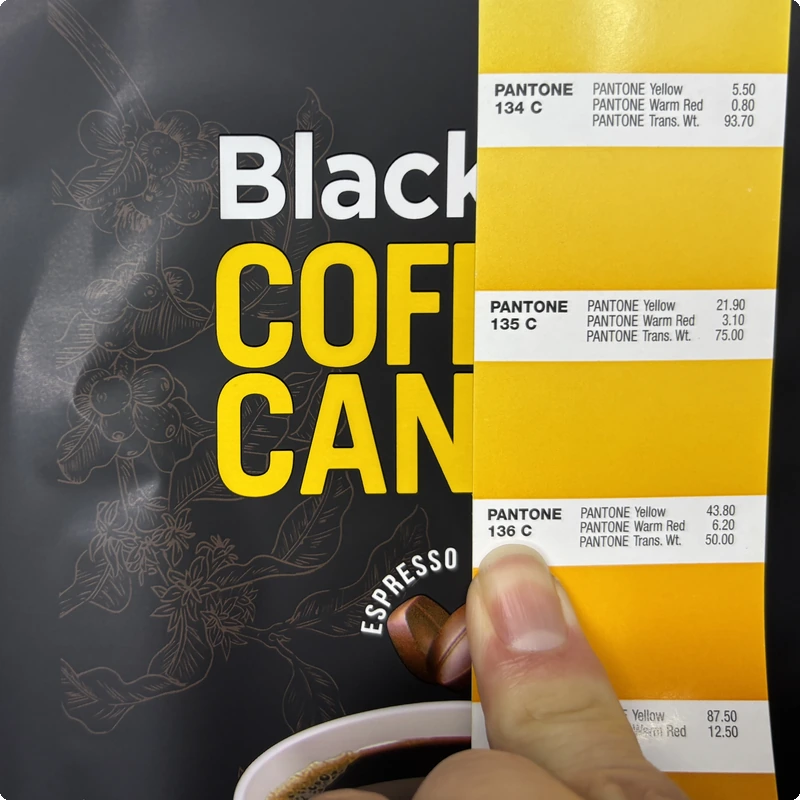
DSS Pack runs in-house production with a dedicated engineering team. Every step — printing, lamination, slitting, bag making, and QC — happens under one roof, giving you direct accountability and faster turnaround.
Delivery Speed and Reliability
Industry standard is 25–40 days after order confirmation. DSS Pack delivers in 15 days — nearly half. For a startup racing to launch, those saved days can mean hitting or missing a seasonal window. When a supplier quotes a timeline, ask whether it starts from order confirmation or artwork approval, and whether cylinder engraving is included.
Communication and Support
A quality supplier offers English-speaking teams, a dedicated project manager (not rotating sales reps), transparent production progress updates, and technical support for material and barrier questions. DSS Pack provides all of these at every stage, from initial quote through delivery.
Common Mistakes Startups Make When Ordering Custom Packaging
1. Choosing ultra-low MOQ digital without understanding limitations.
Digital at 100–500 pcs costs 3–5x more per unit than gravure at 10,000. You’re limited to CMYK — no exact Pantone matching. Many startups end up reordering at higher quantities anyway, making the initial digital spend sunk cost.
2. Not verifying certifications before ordering.
Especially dangerous for food products. A supplier without FDA or BRC certification puts your entire product line at regulatory risk. Always request current certificate copies before ordering.
3. Over-ordering to chase a lower unit price.
Yes, 50,000 instead of 10,000 saves per unit. But with carrying costs at 20–30% annually, those savings evaporate. One brand ordered 50,000 pouches for a product that sold 8,000 in its first year — 42,000 pouches sat in storage, some degrading past shelf life before use.
4. Not understanding barrier requirements.
Standard barrier (PET/PE) for an oxygen-sensitive product means rancid nuts, stale snacks, or degraded supplements. Match your material structure to your product’s sensitivity.
5. Ignoring delivery timelines in project planning.
If your launch is October 1st and you order packaging September 1st, you’re too late — even with 15-day production. Factor in artwork approval, cylinder engraving, production, shipping, customs, and buffer time. Plan 8–10 weeks ahead.
6. Not requesting physical samples before bulk production.
A digital proof shows colors on a screen, not on actual film. Always request a physical sample before approving bulk. The cost is small; reprinting 10,000 pouches is not.
Cost Considerations: Beyond the Unit Price
Total Cost of Ownership
Your real cost per pouch includes unit price, setup costs (cylinder fees at ~$100–$150 (USD) per color), shipping, customs duties, inventory carrying cost (20–30% of value annually), and quality risk. A factory-direct supplier eliminates middleman markup — DSS Pack manufactures directly in China with no intermediary.
Digital vs. Gravure: The Crossover Point
The cost crossover often falls around 5,000–8,000 units, depending on design complexity and supplier. Below that, digital’s advantage of no cylinder setup wins. Above it, gravure’s lower per-unit cost takes over. At 10,000 units, gravure is clearly the better economic choice — you’re past the crossover, paying less per unit, and getting superior quality. For a custom pouch small batch order at this tier, gravure delivers unmatched value.
Rollstock vs. Pre-Made Pouches
With automated filling equipment, rollstock is cheaper per unit — you’re buying raw printed film rather than finished bags. DSS Pack’s 300 kg MOQ makes this accessible. Without filling machinery, pre-made pouches are the practical choice despite higher per-unit cost.
Frequently Asked Questions
What is the minimum order quantity for custom flexible packaging?
It depends on the print method. Digital printing starts from 100–500 pcs, but gravure printing — which offers superior color quality and material options — typically requires 10,000+ pcs. At DSS Pack, the MOQ is 10,000 pcs for pouches and 300 kg for rollstock film.
Can I get BRC-certified packaging at low MOQ?
Yes. Certifications are factory-level accreditations — they don’t scale with order size. DSS Pack holds ISO 9001, FDA, and BRC certifications, and these apply to all orders regardless of quantity. Always verify a supplier’s certifications before placing an order, especially for food products.
How long does production take?
Production timelines vary by supplier. The industry standard is 25–40 days after order confirmation; DSS Pack delivers in 15 days. This includes gravure printing, lamination, curing, slitting, bag making, and QC inspection. Shipping time is additional.
What is the difference between digital and gravure printing for small batches?
Digital has no plate fees and enables MOQs of 100–500 pcs, but uses CMYK color mixing (no exact Pantone matching) with higher per-unit costs. Gravure requires cylinders (~10,000 pcs MOQ) but delivers photographic-quality print, exact Pantone matching, up to 10 colors, premium finishes, and lower per-unit costs at volume. The crossover point often falls around 5,000–8,000 units.
Can I order rollstock film at low MOQ?
Yes. DSS Pack offers rollstock film from 300 kg — significantly lower than the industry standard of 500 kg. This is ideal for brands with automated filling equipment (VFFS/HFFS).
Do I need to provide my own artwork?
You can provide print-ready vector artwork (AI/PDF with CMYK plus Pantone and dieline), or DSS Pack’s in-house engineering team can assist with dieline creation and technical specifications.
For more questions about MOQs, materials, and shipping, see our complete packaging FAQ.
Conclusion: Your Next Step
The packaging decision you make today shapes your margins, your shelf presence, and your ability to iterate for the next two years. Get the tier right, verify the certifications, and plan your timeline with real buffer — and you’ll avoid the mistakes that quietly sink early-stage brands.
Low MOQ custom flexible packaging does not mean low quality. The 10,000-unit tier is where low MOQ custom flexible packaging becomes accessible to startups without sacrificing gravure print quality, material options, or certifications.
Ready to start your custom packaging project? Get a quote from DSS Pack — ISO 9001, FDA, and BRC certified, with 10,000 pcs MOQ for pouches, 300 kg for rollstock film, and the fastest 15-day delivery after order confirmation.